Why ductless makes sense in the Valley of the Sun
North Phoenix homes face 115°F plus days, attic spaces over 150°F, and long cooling seasons that stretch from April into October. Many houses in 85032, 85050, and 85085 use ducts that run through the attic. In those conditions, duct leakage and heat gain waste a large share of cooling output. The result is high SRP or APS bills and rooms that never feel right in the afternoon.
Ductless mini splits solve that by moving conditioned air without using the attic duct network. Each indoor air handler mounts on a wall, ceiling, or low on a knee wall. It connects to an outdoor heat pump through refrigerant line sets. An inverter compressor ramps up and down to match the room load. This delivers steady temperatures, better humidity control, and quiet operation. In Phoenix, that room-by-room control matters for west-facing bedrooms, sunrooms, and casitas that run warmer than the core of the house.
Day & Night Air Conditioning, Heating, & Plumbing installs high-efficiency ductless systems and provides full ac installation service Phoenix wide. The team covers residential and commercial properties across Maricopa County and understands the high-ambient demands from Desert Ridge to Arcadia and from North Mountain to Ahwatukee.
Common Phoenix complaints that ductless fixes
The pattern is familiar across Arcadia ranch homes and newer builds in Desert Ridge. A homeowner notices hot and cold spots. The thermostat shows the setpoint, but a west-facing room still feels 5 to 7 degrees warmer at 5 p.m. Utility bills trend upward, and the central system runs long cycles. If the home still runs an older R-22 unit, repairs are costly and refrigerant is obsolete.
These symptoms tie back to the limits of a single central air conditioner trying to balance a house with varied exposures and insulation levels. Long trunk lines in a 150°F attic push static pressure up. Return paths are undersized. Supply registers near windows dump cold air, yet the glass re-heats the room within minutes. A ductless mini split bypasses those losses. It cools the room at the source, without attic heat soak and without the static penalty of marginal duct design.
How a ductless mini split is built for Phoenix heat
A quality ductless system uses an inverter-driven compressor that modulates from low to high speed as the load changes. In Phoenix, this matters late afternoon when outdoor temperatures run between 110°F and 118°F. Many leading brands offer high-ambient condensers that maintain capacity under those extremes. Look at the expanded performance tables for 115°F rating points, not only the standard 95°F EER2 data. Day & Night’s design team checks both SEER2 for seasonal efficiency and EER2 at high ambient to predict real bill impact in Maricopa County.
On the indoor side, variable-speed blowers deliver low-noise airflow. The evaporator coil uses hydrophilic coatings that shed condensate faster, which helps control humidity in monsoon season. Smart and programmable thermostats or wireless controllers allow fine setpoint control in each zone. Some systems integrate with central IAQ devices, including media filtration or UV. Most mini split heads include washable filters, yet a separate whole-home filter can pair with a ducted air handler if the home uses a hybrid layout.
Where ductless fits best in North Phoenix homes
Many houses in Moon Valley, Paradise Valley Village, and North Mountain have additions, garage offices, or casitas with poor air distribution. Others in Arcadia and Biltmore have block construction that absorbs daytime heat and re-radiates it at night. A single-zone 9,000 to 15,000 BTU mini split solves these rooms with no need to open the ceiling or add new ductwork. Multi-zone systems support two to six areas using a shared outdoor unit, which suits larger homes in 85050 and 85085 with mixed exposures.
For Ahwatukee homes near South Mountain Park, sun exposure on south and west walls spikes loads in late afternoon. A dedicated indoor unit on that wall keeps the space precise without overcooling the rest of the house. Near Camelback Mountain and the Desert Botanical Garden, older ranch plans often rely on long duct runs that underdeliver to the far bedroom wing. A compact wall-mounted head fixes that without replacing the entire central system.
Single-zone vs. Multi-zone: picking the right path
A single-zone unit pairs one indoor head to one outdoor condenser. It is ideal for a garage gym, home office, bonus room, or a detached studio. Multi-zone systems connect several indoor units to one outdoor heat pump. That approach fits a split-level or a home with a hot bedroom wing plus a warm family room off the kitchen. The designer checks refrigerant line lengths, elevation differences, and total connected capacity to match manufacturer specs. This prevents oil return problems and capacity drop at peak ambient.
Day & Night performs a room-by-room Manual J load calculation. The team inputs window size and orientation, glazing SHGC, ceiling height, insulation values, infiltration, and internal gains from occupants and appliances. The result defines the BTU target per zone. Next, Manual S selection confirms the equipment will hit the load at design temperature, which for Phoenix is 108°F to 112°F depending on microclimate. For multi-zone, the design also maps diversity factors so the outdoor unit is neither undersized nor grossly oversized for real use.
Key components and why they matter
The outdoor unit houses the compressor and condenser coil. An inverter compressor runs at the speed needed to match the current load, which improves comfort and reduces cycling losses. High-ambient rated condenser coils use larger surfaces and high-efficiency fan motors to reject heat at 110°F plus. The indoor unit includes the evaporator coil, a variable-speed blower, and a drain pan. The copper line sets route refrigerant between coils. Proper line sizing, insulation, and flare torque are critical to avoid restrictions and leaks.
The thermostat or controller can be a handheld IR remote, a wall-mounted wired control, or a smart thermostat integrated through the brand’s gateway. Indoor units mount to a secure bracket on the wall or use a ceiling cassette to distribute airflow evenly in open areas. Floor-mount units fit knee walls in older Arcadia ranch plans. A condensate drain routes to the exterior with gravity where possible; a condensate pump is used when elevation blocks a gravity route. The outdoor condenser sets on a pad or wall bracket above grade, with seismic and wind considerations per City of Phoenix code.
In Phoenix, surge protection is a good idea given summer storms. Many homeowners add a compressor saver kit for central systems; inverter-driven mini splits already soft-start by design, which is gentler on the power grid and the compressor. A line-hide channel protects the line set, drain, and control cable from sun exposure and keeps the façade clean to satisfy HOA rules in neighborhoods like Desert Ridge and Biltmore.
Efficiency metrics that predict Phoenix bills
SEER2 defines seasonal cooling efficiency. EER2 shows steady-state efficiency at a specific outdoor temperature and load. HSPF2 rates heat pump heating efficiency, which helps for mild winter mornings. In Maricopa County, SEER2 matters for the long cooling season, but do not ignore EER2 at high ambient. A unit with strong EER2 at 95°F and resilient capacity at 110°F will feel better at 5 p.m. And reduce run time during peak rates.
Day & Night installs SEER2 compliant systems from leading brands, including Mitsubishi Electric, Daikin, Trane, Carrier, Lennox, Rheem, York, Goodman, and American Standard. For high-end ductless control and quiet mode in a home office, Mitsubishi Electric and Daikin offer excellent indoor sound levels and precise inverter modulation. For central air replacements, Trane and Lennox provide reliable split systems and packaged rooftop units that stand up to Phoenix roofs.
Refrigerants and the current transition
Many existing systems use R-410A. Newer product lines are transitioning to lower GWP refrigerants such as R-32 or R-454B case by case. Day & Night’s consultants review safety, serviceability, and availability for each option before recommending an installation. Homeowners with R-22 systems should plan for replacement rather than repair due to cost and parts scarcity. An HVAC replacement to an energy-efficient heat pump improves reliability and cuts utility spend for years.
Installation steps that protect performance
A clean installation process matters more than most people realize. The crew routes the copper line sets with gentle bends to preserve internal volume. If brazing is required, they nitrogen purge to prevent carbon scale inside the tubing. They perform a pressure test with dry nitrogen for a set duration to confirm tightness. After that, a deep vacuum pulls to 500 microns or lower and holds. This removes air and moisture to protect the compressor and expansion device. The charge is adjusted based on factory charge plus line length, and the system is commissioned in cooling mode at real Phoenix ambient.
Electrical runs follow City of Phoenix permitting. Breaker size and wire gauge match the nameplate MCA and MOCP. A service disconnect sits within line of sight of the outdoor unit. The condensate drain terminates per code and away from walk paths to avoid algae stains on pavers. Communication cables are shielded as required by brand. The team registers product warranties and documents model and serials for future service. Day & Night provides photos and as-built notes so the homeowner knows where every line and cable runs.
All work is performed by NATE-certified installers. Day & Night is licensed, bonded, and insured under Arizona ROC #133378. That matters for homes across Phoenix zip codes from 85018 and 85016 near Camelback Mountain to 85032 and 85050 in the Desert Ridge corridor.
How ductless compares to central air and rooftop units
Central air with ducts works well for open plans that already have well-sealed, well-insulated ductwork. A full central AC replacement can be the right move if the existing duct system is sound and the unit is over 12 years old or uses R-22. Day & Night provides both ductless mini-split installation and central air conditioning replacement. The team also installs packaged rooftop units common in Phoenix strip centers and light commercial buildings along Tatum Boulevard and near Phoenix Sky Harbor International Airport.
Ductless shines where duct upgrades are difficult or where room loads vary a lot. For small businesses in 85032 and Glendale or Peoria border areas, a few ductless heads can solve hot offices without a full RTU changeout. For homes in Arcadia, a wall-mounted head for the family room plus a low-profile ceiling cassette in the bedroom wing can solve chronic hot spots without a major remodel.
Comfort trade-offs and edge cases
Some homeowners want a single filter location and central IAQ accessories like media filters or whole-home dehumidifiers. A ducted air handler may fit better in those cases. Visual preferences matter too. A wall-mounted head is visible, and while line hides blend in, some HOAs prefer specific placements. The design team proposes locations that meet both thermal and aesthetic goals and respects HOA guidelines. South and west exteriors often need UV-resistant line hide and extra insulation on the suction line to reduce heat gain.
Very large great rooms may need a higher-capacity ducted or multi-position air handler, or a pair of ceiling cassettes to spread airflow. Kitchens add latent and sensible load from cooking. For that reason, a nearby indoor unit should not discharge straight onto a cooktop area. Sound also matters in nurseries and studios. A ceiling cassette or floor mount with low fan speed can keep sound below 25 to 30 dB in quiet mode, which many brands publish for their premium lines.
What real bills look like after the switch
Savings vary by house, but there is a trend. In a 1,900 square foot home in 85032 with a west-facing master and a home office over the garage, the owner saw summer bills drop by 18 to 28 percent after adding two zones of ductless and right-sizing the central split. The office used to drive the thermostat down for the whole house. Now the office holds 75°F without overcooling the living room. Run time shifts from peak hours into evening as the inverter trims speed instead of short cycling.
In a 1970s block ranch in Arcadia near 44th Street, a single-zone mini split in the family room stopped the nightly 3-degree drift that used to force a 70°F setpoint to feel comfortable. The central unit no longer labors during the 4 p.m. To 7 p.m. Window. Comfort improved first, and the utility statement followed.
Typical costs and financing context
Pricing depends on capacity, line set length, electrical distance, wall or ceiling type, and brand. For a single-zone system in the 9,000 to 15,000 BTU range, installed costs in Phoenix often fall between mid-$3,000s and mid-$6,000s. Multi-zone projects that serve three to five rooms can range higher, often from the low teens to the mid-$20,000s when carpentry, line hide, pumps, and electrical upgrades are part of the scope. A full central air replacement with duct repairs can overlap those ranges.
Day & Night offers flexible financing and helps homeowners review current rebates from utilities when available. The company registers 10-year parts warranties with participating brands and reviews labor coverage options. A transparent scope, with brand, model numbers, SEER2 ratings, and line set materials spelled out, protects the outcome and the budget.
Maintenance that keeps performance steady
Mini splits still need care. Wash the indoor filters monthly during peak season. Keep the outdoor coil clear of debris. A professional should clean the blower wheel and evaporator coil every one to two years in Phoenix dust conditions. Drain lines need a flush to prevent algae growth. Inspect flare connections and insulation on the suction line for UV wear. Day & Night offers maintenance plans for both ductless systems and central units. The team checks compressor amps, fan speeds, coil condition, and controller firmware. Simple attention preserves efficiency and quiet operation.
SEER2 compliance and why Manual J matters here
The 2023 SEER2 standards raised the bar on cooling efficiency. Phoenix sits in a region that demands high-ambient performance beyond rating minimums. A proper Manual J for each zone ensures the equipment fits the space. Oversizing looks powerful on paper but hurts comfort and humidity control, even in a dry climate. It can also push multi-zone systems into short cycling during shoulder months. Undersizing makes the unit struggle at 5 p.m. Day & Night performs Manual J and Manual S for every ac installation service Phoenix job and documents the math for review.
Brands Phoenix homeowners ask about
Brand preferences vary. Many homeowners in 85016 and 85018 ask for Lennox or Trane due to quiet operation and durability under sun load. Others in Desert Ridge prefer Carrier or American Standard for their dealer network and controls. For ductless, Mitsubishi Electric and Daikin are frequent picks for quiet indoor heads and refined inverter control. Rheem, York, and Goodman provide solid value solutions, which can help in rental properties in Tempe, Glendale, or Mesa while still meeting SEER2 requirements.
For a home office near Paradise Valley Village, a Mitsubishi ductless mini split offers a strong low-speed modulation band that holds a steady 74°F without drafts. For a music room in Moon Valley, Daikin’s low indoor sound levels are helpful. Day & Night is factory-authorized with several brands and can match the control style and performance curve to the space.
Permit, code, and inspection in the City of Phoenix
Mini split installations in Phoenix require electrical permits and, in some cases, mechanical permits. The inspector checks disconnects, conductor sizing, overcurrent protection, and clearances. Mounts and wall penetrations must be sealed to block pest entry and hot air leakage. Condensate routing follows city rules. On multi-family properties near Chase Field or downtown, association and building management approvals are part of the process. Day & Night handles the paperwork, scheduling, and final inspection so the system is legal and safe from day one.
A quick homeowner screening checklist
Homeowners ask how to tell if ductless is the right next step. These simple checks help start the conversation and support a focused site visit.
- A room runs 3°F to 7°F warmer than the thermostat in late afternoon, most days from May to September.
- Attic ducts are hard to reach or would need major work to extend into an addition or garage office.
- The current system is 10+ years old, uses R-22, or needs frequent repairs during peak heat.
- Monthly APS or SRP bills are high relative to square footage, despite reasonable setpoints.
- An HOA allows line-hide channels and an outdoor condenser placed out of public view.
What installation day looks like
Homeowners want a clear picture of the work steps and timing. A typical single-zone project in 85032 or 85050 fits within one day. Multi-zone plans run longer. Here is a concise snapshot.
- Arrival, protective floor covers, and final walk-through to confirm head locations and line routes.
- Mount indoor bracket, drill core for line set and drain, route electrical and control cable.
- Set outdoor condenser on pad or bracket, connect line sets with torque-verified flares or brazed joints.
- Pressure test, deep vacuum to 500 microns or below, release charge, and verify subcool or target parameters.
- Start-up, controller setup, homeowner training, cleanup, and debris removal.
Why North Phoenix shifts to ductless right now
The mix of housing stock and climate drives this shift. Ranch homes with low-slope roofs trap heat in shallow attics. Newer builds still push long runs to far rooms. Families work from home and want comfort without dropping the whole-house setpoint. Ductless delivers targeted cooling, better high-ambient performance, and strong SEER2 ratings. It also phases out reliance on aging R-22 systems and frequent repair cycles.
Homeowners across Phoenix and nearby cities like Scottsdale, Tempe, Mesa, Glendale, Peoria, Chandler, and Gilbert have adopted a hybrid approach. They right-size the central system for core areas and use ductless for tough rooms. That split improves comfort and trims bills without a major remodel.
The service framework that supports a lasting result
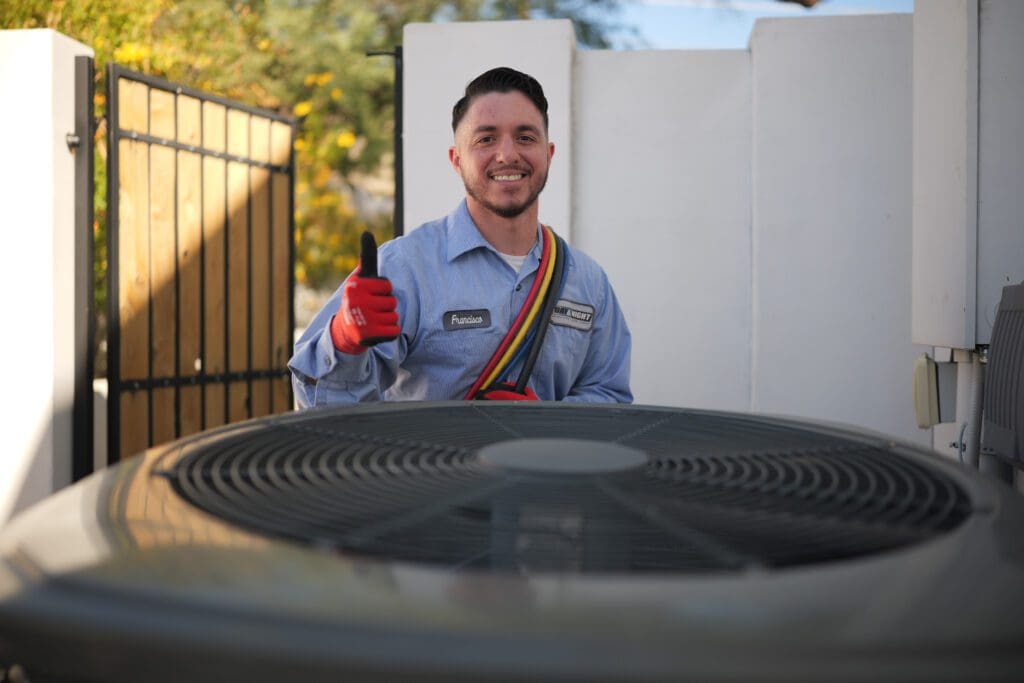
A good outcome is part design, part parts quality, and part workmanship. Precision load math, solid brands, clean refrigerant practices, and careful commissioning protect the investment. Day & Night documents the load calc, the equipment selection, and the commissioning results. NATE-certified installers set blower speeds, verify controller modes, and confirm drain operation. The company’s ROC #133378 licensing and insurance stand behind the work for homes in 85001 through 85085.
The team also addresses indoor air quality needs. If allergies drive the project, they review filtration options. Ductless heads use washable screens, and they can be paired with a ducted air handler and a deep media cabinet for the rest of the home. For monsoon months, they review setpoints that balance humidity and coil temperature to prevent clammy rooms. Smart thermostats and brand controllers help schedule temperatures to match APS and SRP rate windows.
Commercial notes for rooftop and ductless near PHX
Small office suites near Phoenix Sky Harbor International Airport or along the 51 often rely on rooftop packaged units. When a tenant build-out adds interior offices, airflow can suffer. A ductless head or two can stabilize those rooms without raising the RTU setpoint for the entire suite. For retail near Chase Field or in Glendale and Peoria corridors, a compact ceiling cassette can solve cashier stations that overheat during door-open hours. Day & Night provides commercial HVAC replacement and can stage projects to avoid downtime during business hours.
What makes Day & Night a safe pick
The company pairs Manual J load calculations with SEER2 compliant equipment. Installers are NATE-certified and follow brand-specific commissioning steps. Day & Night is licensed, bonded, and insured under Arizona ROC #133378. The team installs Trane, Carrier, Lennox, Goodman, Rheem, York, Daikin, Mitsubishi Electric, and American Standard, and matches features to the home’s thermal profile. Warranties run up to 10 years on parts for many lines, and financing options reduce upfront pressure.
For homeowners searching ac installation service Phoenix or AC installation service near me, a local crew that knows Camelback microclimates, Desert Ridge wind exposure, and Ahwatukee foothill heat reflection makes a difference. Designs account for sun angles, dust, and high-ambient operation so systems hold capacity at the times that matter.
Ready for steady room-by-room comfort?
Day & Night Air Conditioning, Heating, & Plumbing provides ductless mini-split installation, central AC replacement, and rooftop unit upgrades across Phoenix, AZ and Maricopa County. Service zones include Arcadia 85018, Biltmore 85016, Moon Valley and North Mountain 85021, Desert Ridge 85050 and 85054, North Phoenix 85032 and 85085, plus Ahwatukee 85044.
Expect NATE-certified installers, Manual J and Manual S engineering, SEER2 compliant systems, clean line-set work, and documented commissioning. Ask about flexible financing and current utility rebates. Arizona ROC #133378. Licensed, bonded, insured.
Book a visit today to lock in a design that fits Phoenix heat, your rooms, and your budget. Request a consultation, schedule an installation, or get a free replacement quote. For fast scheduling and map-pack verified service, search “ac installation service Phoenix Day & Night” and select the listing nearest Camelback Mountain, Desert Ridge, or South Mountain Park.
Request a consultation | Get a free installation quote | Schedule a repair